What to See in Carthage
The best ruins in Carthage, ranked for a first visit: the Antonine Baths, Byrsa Hill, the Punic ports and Tophet, the Roman villas and more, with the best route for Punic or Roman history.
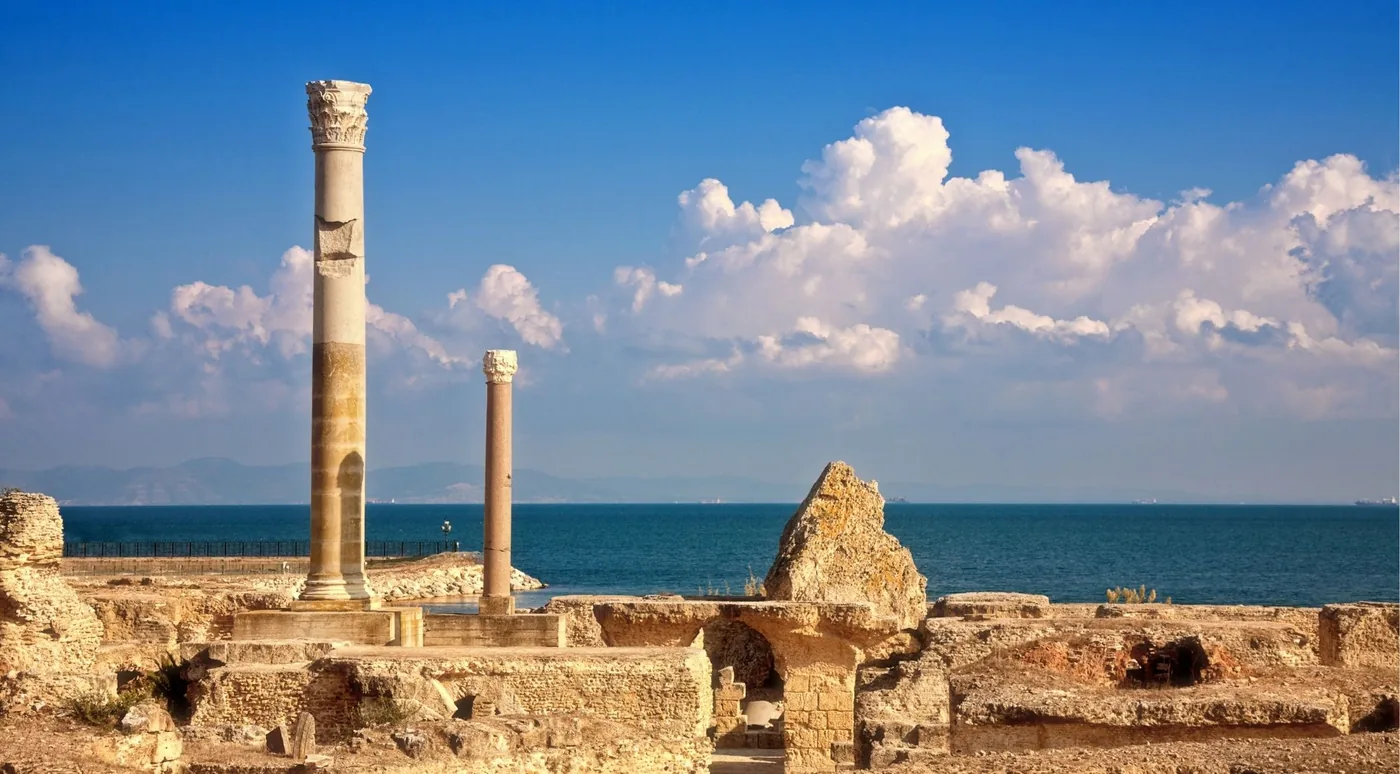
For most first-time visitors, three or four sites are enough. Carthage is not one monument but a scatter of separate ruins across a seaside suburb, and the visit that works is a deliberate choice of one strong Punic site and one or two Roman ones, not a race through all of them.
Check Availability
The short list
| Site | Best for | |
|---|---|---|
| 1 | Antonine Baths | Monumental Roman ruins and instant visual impact |
| 2 | Byrsa Hill | Understanding the whole story of Carthage |
| 3 | Punic Ports | Hannibal, naval power and Punic history |
| 4 | Tophet | Archaeology enthusiasts interested in Punic religion |
| 5 | Roman Villas | Domestic life in Roman Carthage |
| 6 | Roman Theatre | Roman-history enthusiasts |
| 7 | Amphitheatre | Completists; less essential on a short first visit |
| 8 | Maalga Cisterns | Roman engineering and water supply |
The first four are the core of a good visit. The rest are additions for a longer day or a particular interest; our list of the best things to do in Carthage explains what each site is best for. One multi-site pass, bought in cash at the first gate you reach, opens the fenced enclosures; our tickets and site guide covers the price and the opening hours.
The eight sites, in order
1. Antonine Baths
The best site in Carthage for monumental Roman ruins, and the one with the most immediate impact. These were the largest Roman baths in Africa. What survives is mostly the service level below the bathing halls, so you walk through vaulted undercrofts with the sea directly beyond. If a combined tour gives Carthage only an hour, this is usually where it goes.
2. Byrsa Hill
The place to understand the overall story. The hill was the Punic citadel, the Romans levelled it for their forum, and the Carthage National Museum and the Acropolium stand on top today. From the terrace you can see the ports, the baths and the Gulf of Tunis at once, which makes everything else you visit easier to place.
3. Punic Ports
The site for Hannibal, naval power and the Carthage that Rome destroyed in 146 BC. Two basins survive as lagoons: the circular naval harbour and the rectangular commercial one. There is not much standing stone, but the shape of the city’s power is still on the map.
4. Tophet
Best for travellers interested in archaeology and Punic religion. It is a walled precinct of carved stelae and urns, long read as a site of child sacrifice and still argued over by archaeologists. It looks like a field of stones, and it is the one place at Carthage where a guide changes everything.
5. Roman Villas
Useful for understanding domestic life in Roman Carthage: mosaic floors, a reconstructed peristyle and a quieter hillside setting than the headline sites. A good second Roman stop after the baths.
6. Roman Theatre
A good addition for Roman-history enthusiasts. It has been restored and is still used for performances during the Carthage festival, so it reads as a working building more than a ruin.
7. Amphitheatre
Historically worthwhile, but less essential on a short first visit. What remains is mostly foundations and underground galleries.
8. Maalga Cisterns
Best for travellers interested in Roman engineering. These huge reservoirs stored the water brought to Carthage by the aqueduct from Zaghouan. They sit away from the main cluster of ruins, so check access on the day before making the detour.
The best route for your interest
| If you came for | Visit |
|---|---|
| Hannibal and Punic Carthage | Byrsa Hill, the Punic Ports and the Tophet |
| Roman Carthage | The Antonine Baths, the Roman Villas and the Roman Theatre |
| A first-time overview | Byrsa Hill, the Antonine Baths and the Punic Ports |
The first-time route works because each stop adds something the others cannot: Byrsa gives you the map, the baths give you the scale, and the ports give you the Punic city Rome built over. The enclosures are a kilometre or two apart, so allow for a taxi or a vehicle between them. Our Carthage from Tunis guide covers the train stations for each.
Seeing them with a guide
A guide matters more at Carthage than at almost any other site in the area, because the ruins belong to different periods and are spread across a suburb. The Carthage and Sidi Bou Said Tour works through six Carthage sites in chronological order with the entry tickets included, then finishes with an hour in Sidi Bou Said. For the ruins alone, on foot, the Carthage walking tour covers seven sites in about three hours.
Frequently asked questions
What are the best ruins to see in Carthage?
The Antonine Baths, Byrsa Hill, the Punic Ports and the Tophet. The first three make the best first-time route; add the Tophet if you are interested in Punic religion and have a guide.
How many sites should I visit in Carthage?
Three or four for most first-time visitors. One strong Punic site and one or two Roman ones tell you more than a rushed attempt at all of them.
Which Carthage sites are best for Hannibal and Punic history?
Byrsa Hill, the Punic Ports and the Tophet. Most of what you see elsewhere at Carthage is Roman, built after the Punic city was destroyed in 146 BC.
Which sites are best for Roman Carthage?
The Antonine Baths, the Roman Villas and the Roman Theatre. Add the Maalga Cisterns if Roman engineering interests you.
Is the amphitheatre worth visiting?
It is historically worthwhile, but it is mostly foundations and underground galleries, so it is the easiest site to drop on a short visit.
One strong Punic site and one or two Roman ones tell you more about Carthage than racing through a long checklist. Compare the tours that include site entry or check availability for your dates.
See Carthage and Sidi Bou Said in One Day
Pickup from Tunis, Hammamet, Sousse or the cruise port, a licensed guide at the ruins, and free time in the blue village. Most tours cancel free up to 24 hours ahead.
Check Availability & Book