Is Carthage Worth Visiting?
Is Carthage worth visiting? What the ruins are like, why some visitors leave underwhelmed, the three sites to see first, how long you need, and whether to go with a guide.
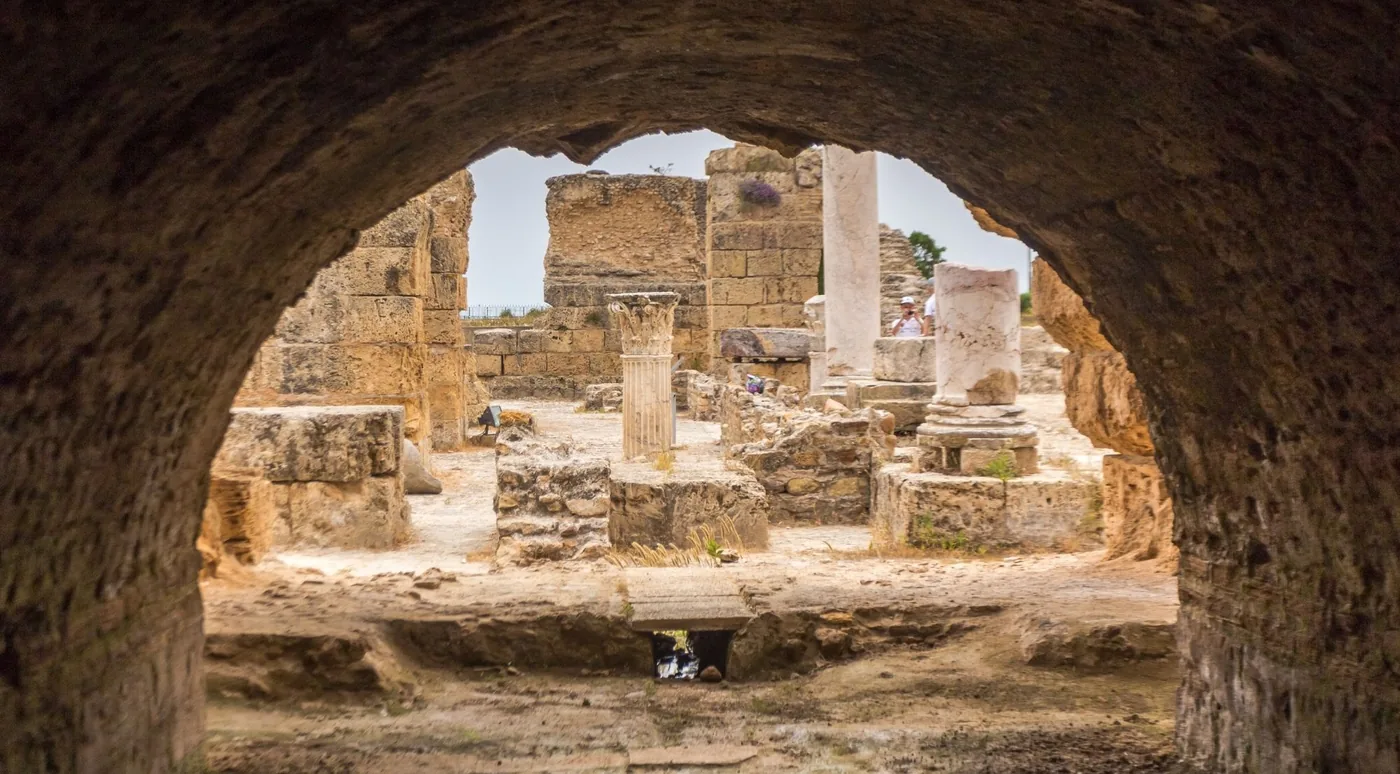
Yes, especially if you enjoy ancient history, but go in with the right picture. Carthage is not Pompeii. The ruins are scattered through a modern seaside suburb, each site behind its own fence, and they vary a great deal in how much there is to see. Come for the history, start at the right site, and Carthage makes a rewarding half-day.
Check Availability
Why it is worth visiting
This was one of the great powers of the ancient Mediterranean. Punic Carthage was the city of Hannibal, the rival Rome fought across three Punic Wars, and the city Rome destroyed in 146 BC. The Romans then rebuilt it as one of the largest cities in their empire, the capital of the province of Africa, so the ground holds two cities layered on top of each other.
That double history is the reason to go. Standing on Byrsa Hill, you are on the Punic citadel the Romans levelled for their forum. At the Punic Ports, the two basins that held Carthage’s fleet are still on the map as lagoons. At the Antonine Baths, the scale of the Roman city is still obvious, with the sea directly beyond the vaults. The archaeological site of Carthage has been on the UNESCO World Heritage List since 1979.
Why some visitors feel underwhelmed
The disappointed reviews tend to come from the same three situations:
- They expected one continuous ancient city. There is no single gate, no street of standing houses and no view of a whole ruined town. The sites sit a kilometre or two apart among villas and embassies.
- They started at a visually subtle site. The Tophet and the Punic Ports carry some of the most important history in Carthage, and to an unprepared eye they look like a field of stones and a pair of lagoons.
- They arrived with no historical context. Without knowing what stood here, much of Carthage reads as broken foundations. With it, the same foundations become the city Rome feared.
None of these is a reason to skip Carthage. All three are reasons to plan the visit before you go.
The best ruins for a first visit
Three sites give a first-time visitor the clearest picture (our list of things to do in Carthage covers the rest):
| Site | Why go first |
|---|---|
| Antonine Baths | Visual impact: the largest Roman baths in Africa, with vaulted halls beside the sea |
| Byrsa Hill | Context: the citadel, the Carthage National Museum and a view over the whole site |
| Punic Ports | The Carthaginian story before Rome: the naval and commercial harbours of Hannibal’s city |
One multi-site pass, paid in cash at the first gate you reach, covers the fenced enclosures. Our guide to what to see in Carthage ranks all eight main sites and suggests a route by interest, and the tickets and opening hours guide covers the price of the pass.
How long do you need?
Two to three hours suits most visitors. That is enough for the three sites above, the transfers between them and a look inside the museum on Byrsa Hill.
Half a day or longer suits history enthusiasts who want the Tophet, the Roman Villas, the theatre and the Maalga Cisterns as well. A combined day tour that gives Carthage a single hour usually shows you one enclosure, most often the Antonine Baths. That is a real visit, but it is a sample of Carthage, not the whole of it.
Guide or independent?
A guide is particularly valuable here, because the archaeological sites are fragmented and thinly labelled, and the stones belong to two different civilisations. A good guide puts the Punic and Roman cities in order and turns the quieter sites into the most interesting part of the day. A vehicle between the enclosures also saves a lot of walking in the heat.
The Carthage and Sidi Bou Said Tour (4.9/5 from more than 70 reviews) works through six Carthage sites in chronological order with the entry tickets included, then finishes with an hour in Sidi Bou Said. If you only want the ruins, on foot, the Carthage walking tour (4.8/5 from more than 40 reviews) covers seven sites in about three hours. A private car with a driver-host is the other common choice; our page on the Tunis VIP private day trip explains what that driver does at Carthage and what is left to you.
Going independently works well if you read up on the history beforehand. The TGM commuter train from Tunis Marine stops at several Carthage stations for well under a dinar, and our guide to visiting without a car lists which station serves which site.
Final thoughts
Carthage is worth it when you visit for historical depth rather than perfect preservation. For most first-time visitors, the strongest plan is a three-hour highlights visit, the Antonine Baths, Byrsa Hill and the Punic Ports, followed by the afternoon in Sidi Bou Said, ten minutes up the coast. The village is the relaxed half of the day, and it is easier to enjoy once the hot, open-air sightseeing is done. Our guide to whether Sidi Bou Said is worth visiting covers the second half.
Frequently asked questions
Is Carthage worth visiting?
Yes, especially if you enjoy ancient history. The ruins are scattered through a modern suburb, not preserved as one city, so go for the story of Punic and Roman Carthage and start with the Antonine Baths, Byrsa Hill and the Punic Ports.
Is Carthage like Pompeii?
No. Pompeii is a whole town preserved in place. Carthage is a set of separate fenced sites spread across a residential suburb, mostly foundations, vaults and harbour basins, because Rome destroyed the Punic city and later builders reused the stone.
Why are some people disappointed by Carthage?
Usually because they expected one continuous ancient city, started at a visually subtle site such as the Tophet, or arrived without any historical context. A guide, or some reading beforehand, solves most of it.
How long do you need at Carthage?
Two to three hours for most visitors, which covers the three best first-time sites and the museum on Byrsa Hill. History enthusiasts can spend half a day or longer.
Do you need a guide at Carthage?
It helps more here than at most sites, because the ruins are fragmented and thinly labelled. Independent visits work well if you research the history first and take the TGM train or a taxi between sites.
Should I combine Carthage with Sidi Bou Said?
Yes. They are about ten minutes apart by road. See Carthage first, while you are fresh, and finish in Sidi Bou Said for tea and the view over the Gulf of Tunis.
A three-hour highlights visit followed by Sidi Bou Said is the plan that works for most first-time visitors. Compare the tours that include site entry or check availability for your dates.
See Carthage and Sidi Bou Said in One Day
Pickup from Tunis, Hammamet, Sousse or the cruise port, a licensed guide at the ruins, and free time in the blue village. Most tours cancel free up to 24 hours ahead.
Check Availability & Book