Carthage Tickets & Ruins Guide
What the Carthage multi-site pass costs and covers, which of the seven enclosures are worth your time, opening hours, and what to see at each one.
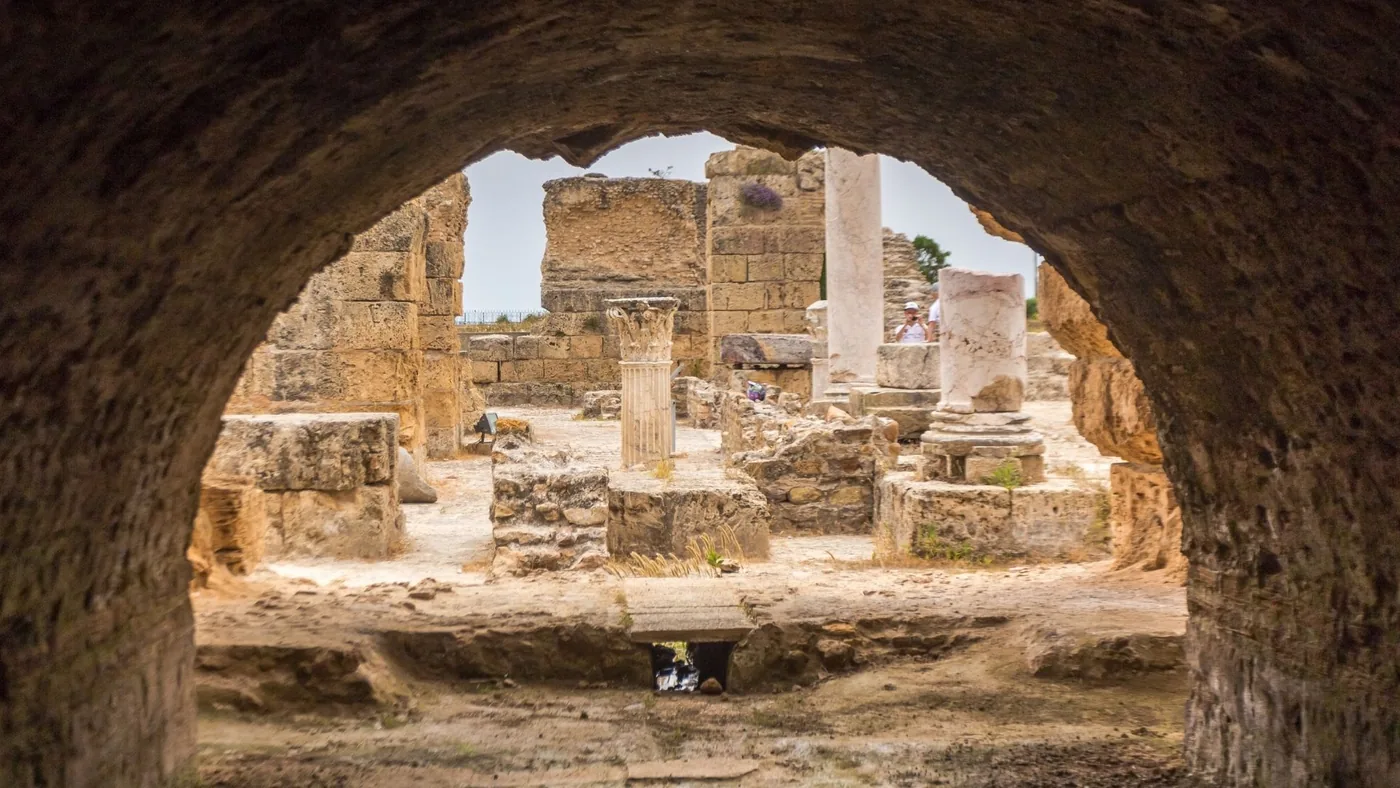
One ticket opens everything. That is the first thing to know about Carthage, and it is why the site confuses people: there is no single entrance, no queue and no gift shop at the front, because the archaeological site is seven separate fenced enclosures scattered through a seaside suburb. You buy a multi-site pass at whichever gate you reach first, keep it, and show it at the rest.
Check Availability
What the pass costs, and what it opens
Carry cash in dinars. Card acceptance at the gates is unreliable and there is no online booking system.
The price has moved. Visitor reports from a few years ago put the pass at around 12 dinars; more recent accounts put it near 30 dinars for non-residents. Treat 30 as the figure to budget and check at the gate, because this is exactly the kind of number that changes without announcement. Even at the higher figure it is roughly ten dollars for a UNESCO World Heritage site, which is not much.
The pass covers all seven:
| Enclosure | What is there | Worth the stop? |
|---|---|---|
| Antonine Baths | The largest Roman thermae in Africa, on the shore | Essential |
| Byrsa Hill | Punic quarter, the museum, the Acropolium, the whole-site view | Essential |
| The Tophet | Punic sanctuary, thousands of carved stelae | Yes, with a guide |
| Punic ports | The circular naval basin and the rectangular commercial one | Yes, briefly |
| Roman theatre | Restored and still used for the Carthage festival | If you have time |
| Amphitheatre | Mostly foundations and underground galleries | Only for completists |
| Roman villas | Mosaic floors and a reconstructed peristyle | Yes, quietly good |
The two you must not skip
The Antonine Baths. The scale is the point. What survives is mostly the service level beneath the bathing halls, which means you are walking through vaulted undercrofts while the columns of the floor above stand at the height of a house. The sea is directly beyond, and the reason the complex was built here at all was the aqueduct that carried water 132 kilometres from the springs at Zaghouan, one of the longest in the Roman empire.
Byrsa Hill. This is where the whole site makes sense. The hill was the Punic citadel, the Romans levelled it to build their forum, the French put a cathedral on top in the nineteenth century, and the Carthage National Museum occupies the buildings beside it. From the terrace you can see the ports, the baths, the Gulf of Tunis and the white cube of Sidi Bou Said on the next headland. Ten minutes here does more for your understanding than an hour anywhere else.
One caution: the museum and the cathedral building on Byrsa have been affected by renovation work in recent years, and reports of closures come and go. If a tour lists the Carthage National Museum as a stop and that is why you chose it, confirm with the operator before booking.
What the Tophet is, and why it is argued about
A walled precinct near Salammbo station holding thousands of urns and carved limestone stelae. Roman and Greek writers described the Carthaginians sacrificing infants here, and the Tophet has been read that way since it was excavated in the 1920s. Archaeologists have contested it for decades, with some arguing the urns are a cemetery for children who died young.
It is a small site and it looks like a field of stones. It is also the single place at Carthage where a guide changes everything, because the argument is the interest.
Opening hours, and the Monday problem
The enclosures generally open around 08:00 and close at 17:00 in winter and 19:00 in summer, daily. Hours shift without much warning and vary between sites, so confirm on the day if you are on a tight schedule.
The Monday issue is not Carthage itself but the Bardo National Museum in Tunis, which closes every Monday and holds the mosaics excavated from these villas. Many tours pair Carthage with the Bardo. A Monday booking quietly loses that half, and some operators do not run the combined itinerary at all on Mondays. Our Bardo combination page lists the tours that include it.
Which tours include the ticket
This is where the price differences on our tours page come from. Four listings include site entry outright:
- Carthage and Sidi Bou Said Tour — every Carthage site, plus an hour in the village
- Carthage walking tour — seven sites on foot over three hours
- From Tunis half-day — entry and guide included
- Carthage, Bardo, Sidi Bou Said and Medina with lunch — both museums’ tickets included
Most of the cheaper resort excursions exclude it. Add roughly 30 dinars a head before comparing two listings on price.
Practical notes
- Wear proper shoes. The ground inside every enclosure is uneven cut stone, and Byrsa involves a climb.
- There is almost no shade. From April onward a hat is not optional.
- Facilities are minimal. Toilets exist at the larger sites and not at the small ones. There are cafés on the main road, not inside the fences.
- Photography is unrestricted at the outdoor enclosures.
- Allow two hours minimum for three or four enclosures with driving between them.
Frequently asked questions
How much is the Carthage entrance ticket?
One multi-site pass covers all seven enclosures. Recent visitor reports put it near 30 dinars for non-residents, up from around 12 a few years ago. Bring cash in dinars — there is no online booking and card acceptance at the gates is unreliable.
Does one ticket cover all the Carthage sites?
Yes. The pass is bought at whichever gate you arrive at first and is shown at the others for the rest of the day. Keep it somewhere you can find it.
What are the Carthage opening hours?
Generally 08:00 to 17:00 in winter and 08:00 to 19:00 in summer, daily. Hours can differ between enclosures and change without much notice, so confirm on the day if your schedule is tight.
Is Carthage open on Mondays?
The archaeological enclosures are normally open daily. The Bardo National Museum in Tunis, which many tours pair with Carthage, is closed on Mondays — that is the closure that catches people out.
What is the best part of Carthage to see?
The Antonine Baths for scale and the sea, and Byrsa Hill for the view and the context. If you only have an hour, those two are the visit. The Tophet is the most interesting if you have a guide to explain it.
How long does Carthage take?
Two to three hours for three or four enclosures with transport between them. A full circuit of all seven on foot is about three hours of walking on top of the visiting.
Is Carthage a UNESCO site?
Yes, inscribed in 1979, the same year as the Medina of Tunis. Several tours take in both.
Want the ticket handled for you? Compare the tours that include site entry or check availability for your dates.
See Carthage and Sidi Bou Said in One Day
Pickup from Tunis, Hammamet, Sousse or the cruise port, a licensed guide at the ruins, and free time in the blue village. Most tours cancel free up to 24 hours ahead.
Check Availability & Book