Best Time to Visit Carthage & Sidi Bou Said
Month-by-month weather for Carthage and Sidi Bou Said, why July at the ruins is punishing, when the crowds arrive, and the two windows that work best.
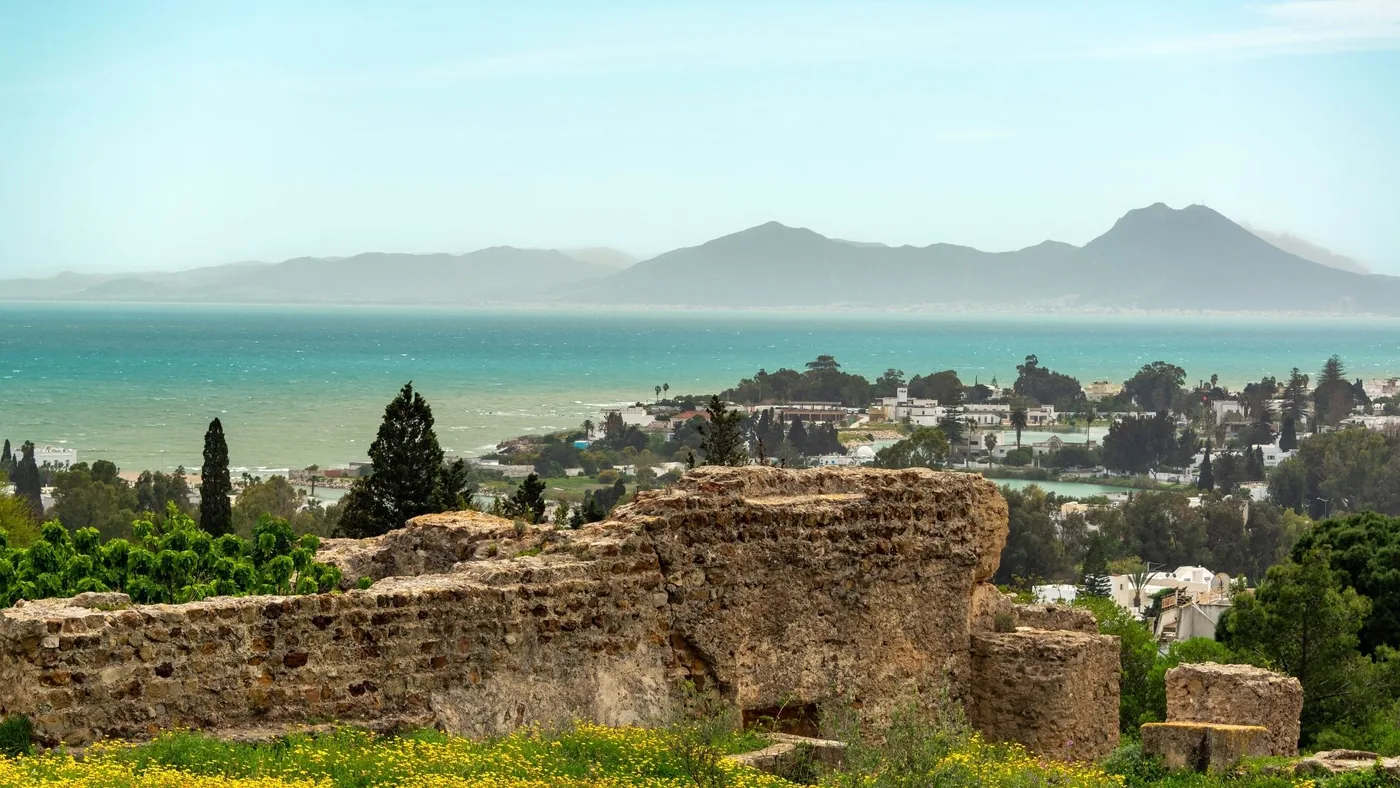
Mid-April to mid-May, and late September through October. Those are the two windows, and the reason is not really the temperature reading. It is that Carthage is an open archaeological site with almost no shade, and Sidi Bou Said is a village you climb. Both punish a hot afternoon far more than a beach does.
Check Availability
The climate in one table
Tunis has a Mediterranean climate: mild, wet winters and hot, dry summers, with around 2,800 hours of sunshine a year and 485 mm of rain, almost all of it between October and March.
| Average high | Rain | The site at that time | |
|---|---|---|---|
| January | ~17 °C | Wet | Empty, green, occasional heavy rain |
| February | ~17 °C | Wet | Same, with the first wildflowers |
| March | ~19 °C | Easing | Good, still unpredictable |
| April | ~22 °C | Light | Excellent — wildflowers in the ruins |
| May | ~25 °C | Light | Excellent — warm, dry, not yet crowded |
| June | ~29 °C | Very dry | Hot by midday, bearable early |
| July | ~33 °C | Driest month | Hard — no shade, peak crowds |
| August | ~33 °C | Very dry | Hard — the hottest month |
| September | ~30 °C | Light | Improving through the month |
| October | ~26 °C | Rising | Excellent — warm sea, thinner crowds |
| November | ~21 °C | Wet | Pleasant, shorter days |
| December | ~18 °C | Wettest month | Quiet, green, chance of washout |
January averages about 12 °C overall and August about 29 °C; the highs above are daytime figures. July is the driest month with a few millimetres of rain; December is the wettest.
Why summer is harder here than the temperature suggests
Three things compound.
There is no shade at Carthage. The Antonine Baths, Byrsa Hill and the Tophet are open ground with cut stone underfoot. Stone re-radiates heat, so the air temperature understates what you feel by mid-afternoon.
Sidi Bou Said is a climb. The main street rises steadily on cobbles from the car park to the viewpoint. In August that is a genuine effort rather than a stroll.
The coaches arrive together. July and August are peak season on the Hammamet and Sousse coast, which is where most of the excursion traffic originates. The main street of the village at midday in August is the busiest it gets all year.
If you are visiting in summer anyway, book the earliest departure you can find and treat the ruins as a morning activity. Several operators send the exact pickup time by WhatsApp the evening before, so you will know when you are starting.
Why winter is better than it looks
December through February is mild by European standards, and the sites are close to empty. The ruins are green rather than parched, and the light is beautiful. Sidi Bou Said in February, with the shopkeepers unhurried and the terraces half full, is a nicer village than Sidi Bou Said in July.
The risk is rain. December is the wettest month of the year, and a wet day at an open archaeological site is a different experience entirely. Every tour on this site cancels free up to 24 hours before departure, so the sensible winter strategy is to book, watch the forecast, and decide the evening before. If the forecast is bad, the Bardo Museum is the indoor half of the day and it stays good in any weather.
The two best windows, in detail
Mid-April to mid-May
The strongest period. Daytime highs in the low to mid twenties, rain largely finished, wildflowers among the stones at Carthage, and the resort coaches not yet at full volume. Sea temperatures are still cool if you were hoping to swim, which is the only thing this window does not give you.
Late September to October
The other one. The heat has broken but the sea is at its warmest of the year, which makes this the best window if you are combining the ruins with a beach stay in Hammamet. Rain begins returning through October, though not reliably enough to plan around.
Things the calendar decides for you
- The Bardo closes on Mondays, all year. If your tour includes the museum, do not book a Monday. Its hours also shift seasonally: roughly 09:00 to 17:00 from June to mid-September, and 09:30 to 16:30 for the rest of the year.
- Carthage enclosures close earlier in winter, around 17:00 rather than 19:00. A late-afternoon start in December gets you less than the same start in June.
- Ramadan changes opening hours and café life across Tunisia, and the dates move about eleven days earlier each year. Nothing closes to visitors, but the rhythm of the day is different and many restaurants open only after sunset.
- The Carthage international festival uses the restored Roman theatre in July and August, which can mean that enclosure is closed for rehearsals or events.
Frequently asked questions
What is the best month to visit Carthage?
April, May and October. Daytime highs sit in the low to mid twenties, the rain has largely gone, and the archaeological site is comfortable to walk. Mid-April to mid-May is the strongest single window.
Is it too hot to visit Carthage in July or August?
It is hard rather than impossible. Daytime highs reach about 33 °C and Carthage has almost no shade, so book the earliest departure available and expect to want an indoor afternoon afterwards. August is the hottest month of the year in Tunis.
What is the weather like in Tunis in winter?
Mild and wet. January highs average around 17 °C, and December is the wettest month of the year. The sites are quiet and green, but an open-air archaeological visit in the rain is a poor experience — which is why free cancellation matters in winter.
When is Sidi Bou Said least crowded?
Early morning and late afternoon, in any month, and anything outside July and August. The coach and cruise traffic arrives late morning and clears by mid-afternoon.
Is the sea warm enough to swim?
Roughly July to September. If you are pairing the ruins with a beach stay, late September gives you the warmest water alongside temperatures that make Carthage pleasant again.
Does it rain much in Tunis?
About 485 mm a year, concentrated in autumn and winter. July is the driest month with only a few millimetres; December is the wettest. Summer rain is close to nonexistent.
Know when you are going? Compare tours for your dates or check availability — everything on this site cancels free up to 24 hours before.
See Carthage and Sidi Bou Said in One Day
Pickup from Tunis, Hammamet, Sousse or the cruise port, a licensed guide at the ruins, and free time in the blue village. Most tours cancel free up to 24 hours ahead.
Check Availability & Book